

Resources to Help Educate and
Support Your Patients

We provide clinicians offering RenThyroid with easy-to-access marketing tools to help you educate your patients and grow your practice. These materials are designed to support your efforts in raising awareness about hypothyroidism and the benefits of natural desiccated thyroid (NDT) treatment.
Marketing Resources

Patient Education Brochure
Provide your patients with a detailed trifold brochure, which explains the benefits, safety and efficacy of RenThyroid.
Download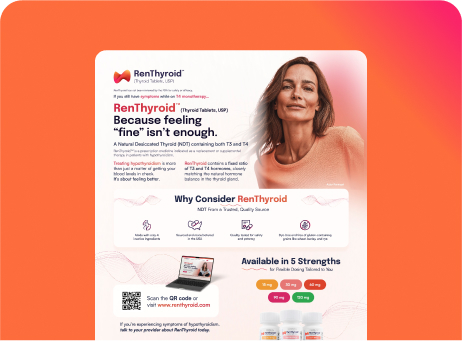
Patient One-pager
Print and display these simplified one-pagers in your practice and share them with patients during consultations to outline the safety and efficacy of RenThyroid.
Download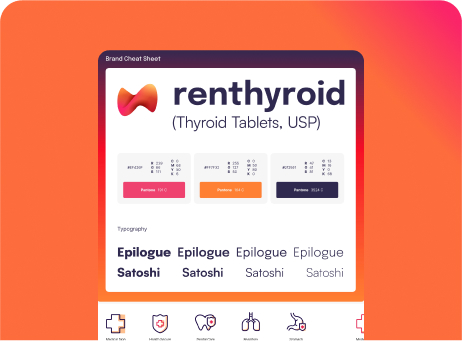
Marketing Guidelines
Instructions for using RenThyroid branding in your practice’s promotional materials
Physician Resources
HCP Education Brochure
Download the RenThyroid Provider Brochure for a detailed look at the drug’s benefits and profile, including indication, dosage and safety information.
Download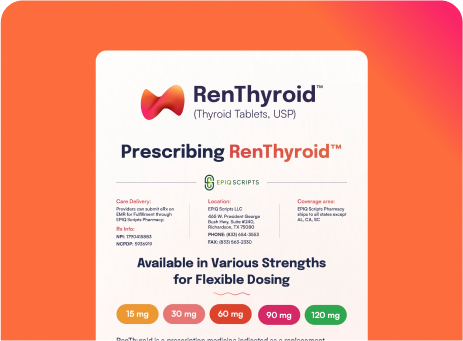
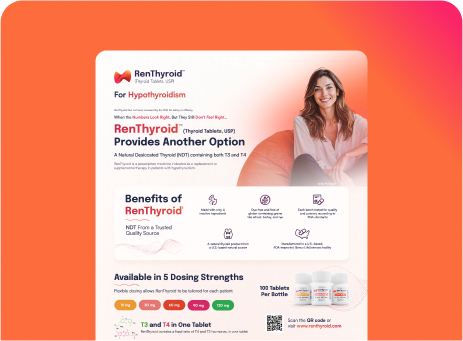
HCP One-pager
Explore the simplified RenThyroid Provider One-pager for an overview of the drug’s profile, including indication, dosage and safety information.
Download"*" indicates required fields
INDICATIONS:
RenThyroid™ (Thyroid Tablets, USP) is a prescription oral medication indicated as:
Note: RenThyroid has not been approved by the FDA.
IMPORTANT SAFETY INFORMATION
Drugs with thyroid hormone activity, alone or together with other therapeutic agents, have been used for the treatment of obesity. In euthyroid patients, doses within the range of daily hormonal requirements are ineffective for weight reduction. Larger doses may produce serious or even life-threatening manifestations of toxicity, particularly when given in association with sympathomimetic amines such as those used for their anorectic effects.
CONTRAINDICATIONS:
RenThyroid is contraindicated in patients with uncorrected adrenal cortical insufficiency, untreated thyrotoxicosis, and/or hypersensitivity to any of component of the product.
WARNINGS AND PRECAUTIONS:
Cardiovascular System. Thyroid hormones should be used with caution in the presence of cardiovascular risks, and particularly coronary artery risks. Patients with angina pectoris and elderly patients present increased risks. Initiate treatment with low doses (15-30 mg). Worsening cardiovascular disease may require reduced dose or discontinuation.
Diabetes and Adrenal Disorders. In patients with concomitant diabetes mellitus, diabetes insipidus, or adrenal cortical insufficiency, thyroid hormones aggravate symptoms of these conditions. Adjust treatment for these concomitant endocrine diseases as appropriate. Treatment of myxedema coma requires simultaneous administration of glucocorticoids.
Oral Anticoagulants. Hypothyroidism decreases and hyperthyroidism increases sensitivity to oral anticoagulants. For patients taking thyroid hormones and oral anticoagulants, prothrombin time and dose should be closely monitored and adjusted based on frequent prothrombin time determinations.
Infant Craniosynostosis. In infants, excessive doses of thyroid hormones may produce craniosynostosis.
ADVERSE REACTIONS:
Adverse reactions other than those indicative of hyperthyroidism because of therapeutic overdosage, either initially or during the maintenance period, are rare. Excessive doses of thyroid result in a hypermetabolic state. In case of overdosage, temporarily discontinue treatment. Treatment may be reinstituted at a lower dosage.
DRUG INTERACTIONS:
Oral Anticoagulants. Concomitant use of thyroid hormones with oral anticoagulants alters the sensitivity of oral anticoagulants.
Insulin or Oral Hypoglycemics. Initiating thyroid replacement therapy may cause increases in insulin or oral hypoglycemic requirements. Patients receiving insulin or oral hypoglycemics should be closely monitored during initiation of thyroid replacement therapy.
Cholestyramine or Colestipol. Cholestyramine or colestipol binds both levothyroxine (T4) and liothyronine (T3) in the intestine, impairing their absorption. Allow 4 to 5 hours between the administration of cholestyramine or colestipol and thyroid hormones.
Estrogen, Oral Contraceptives. Estrogens tend to increase serum thyroxine-binding globulin (TBg), decreasing free levothyroxine (T4). Patients without a functioning thyroid gland who are on thyroid replacement therapy may need to increase their thyroid dose if taking estrogen or estrogen-containing oral contraceptives.
Drug/Laboratory Test Interactions. Certain drugs or moieties interfere with laboratory tests performed in patients on thyroid hormone therapy: androgens, corticosteroids, estrogens, oral contraceptives containing estrogens, iodine-containing preparations, biotin, and preparations containing salicylates.
For complete safety information, please see the full Prescribing Information.
To report suspected adverse reactions, contact Genus Lifesciences at 1-610-782-9780 or Info@GenusLifesciences.com or the FDA at www.fda.gov/medwatch or call 1-800-FDA-1088.